
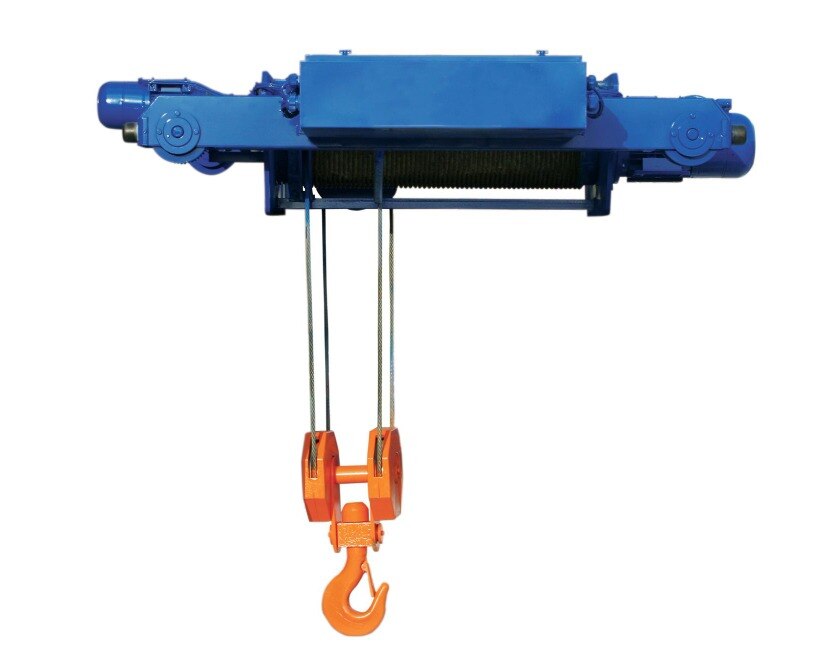
An electric wire rope hoist can serve a foundry, but capacity alone does not prove suitability. By assessing the load spectrum, heat and dust exposure, molten-metal risk, supporting structure, controls and Indian inspection records, you can decide whether the equipment belongs in a melting shop, casting area, fettling section, pattern shop or dispatch zone.
Key takeaways
- Weigh the complete lifted assembly, including slings, hooks and attachments.
- Select duty class from lifting cycles, load spectrum and operating hours.
- Specify heat shields, sealed controls and protection from dust and molten splash.
- Demand load tests, drawings, certificates and maintenance instructions before approval.
Which foundry loads can the hoist safely handle?
An electric wire rope hoist for foundries in Ahmedabad suits a load only after you match the complete lifted assembly to its marked safe working load. Record the actual weight, dimensions, lifting points and centre of gravity for every ladle, mould box, casting, scrap bin, furnace component and maintenance part.
- Include the hook block, lifting beam, grabs, ladle attachments and every permanent below-the-hook device in the lifted weight.
- Separate solid loads, empty containers and filled containers; a filled scrap bin or ladle can weigh far more than its empty shell.
- Map each load to its work area: melting shop, casting area, fettling section, pattern shop or dispatch zone.
- Reject a standard workshop hoist for molten-metal service until a foundry-specific review addresses ladle tipping, power loss, fail-safe braking and single-component failure.
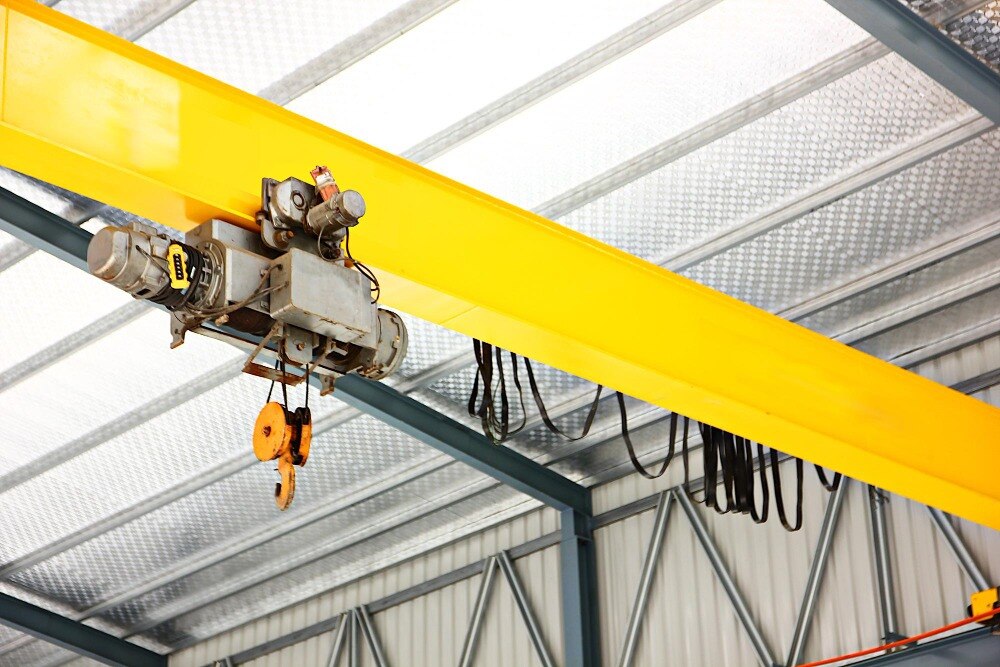
A wire rope hoist for foundry lifting fits greater lift height, capacity, speed or a long rope path. A chain hoist is simpler for short lifts and frequent positioning.
| Option | Strength | Limitation |
|---|---|---|
| Wire rope hoist | Higher capacity, lift height and speed | Requires drum, reeving, rope inspection and replacement |
| Chain hoist | Compact and straightforward for short lifts | Less suitable for long lifts, high speeds or greater capacities |
The same rated capacity does not make every zone safe. Confirm heat, dust, splash, duty cycle and below-the-hook equipment before approval.
How do duty class and capacity change the hoist specification?
A 5-tonne hoist lifting a mould every five minutes needs a higher mechanism duty than a 5-tonne hoist used twice a week for maintenance. Rated capacity limits the load; duty class determines whether the equipment survives the work.
1. Record the load spectrum for each zone: load magnitude, lifting cycles per hour, average lift height, average travel distance, starts per hour and operating hours per day. Include the hook block, beam, grabs, ladle attachments and permanent below-the-hook equipment. Repeated mould or scrap handling increases duty far faster than occasional lifting.
2. Use that spectrum to specify mechanism duty, not capacity alone. Duty affects the motor’s thermal rating, brake holding and stopping performance, drum, gearbox, rope and thermal protection. Ask suppliers to state the duty classification and show the calculation behind it for your electric wire rope hoist for foundry loads Ahmedabad application.
3. Match the rope to the drum diameter, sheave diameter, construction, fleet angle, bending cycles and termination efficiency. High breaking strength does not rescue a rope forced around small sheaves, sharply misaligned, or damaged by heat and dried lubricant.
4. Specify variable-frequency control or two-speed lifting when you need low-speed ladle or mould positioning and reduced swing. Require the motor, brake, gearbox, limits, thermal protection and emergency-stop circuit to operate as one tested system.
Request rated load and lift, cycles per hour, average lift and travel, starts per hour, hours per day, duty class, rope data, drum and sheave sizes, motor thermal data and control details from every wire rope hoist manufacturing plant Ahmedabad supplier.
What protection is required against heat, dust and molten metal?
An electric wire rope hoist for foundries in ahmedabad is suitable only after its heat exposure and contamination limits are matched to the work zone. Radiant heat can harden rope lubricant, damage seals and electrical insulation, weaken brake components, and overheat pendant controls.
Specify the maximum radiant-temperature exposure and require validated protection, such as a heat shield, elevated operator position, remote controls, or heat-resistant cables.
An IP rating describes enclosure resistance to water and solid-particle ingress; it does not prove resistance to radiant heat, abrasive sand, conductive scale, humidity, or molten-metal splash. Check the motor, brake, control panel, festoon or pendant cable, and switches against the actual dust and moisture exposure.
Coal, coke, and metal powders require a hazardous-area assessment where combustible dust could form a classified zone. A standard IP enclosure is not Ex certification; motors, brakes, switches, festoon equipment, and control gear must match the applicable dust or gas classification.
For wire rope hoist for foundry lifting involving ladles, verify:
- Fail-safe brakes and controlled lowering
- Independent upper and lower limit switches
- Overload protection and emergency stop
- Guarded rope reeving and drum guards
- A hook safety latch
- Risk controls for ladle tipping, power loss, and single-component failure
Add independent secondary retention when the risk assessment requires it. A general-purpose hoist is not molten-metal equipment by assumption; approve it only after the complete system and its heat, dust, and failure controls pass design review.
Can the building, runway and electrical supply support it?
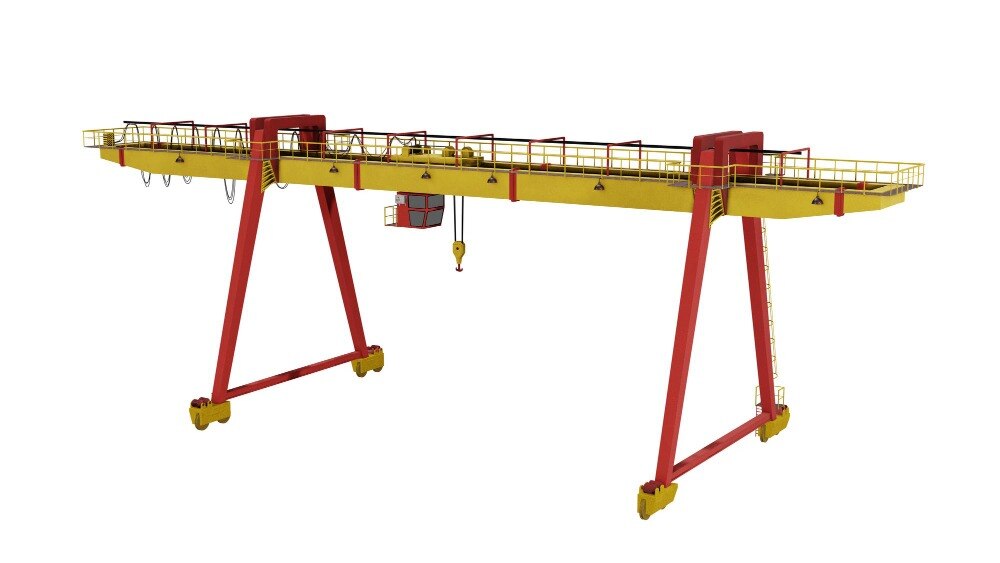
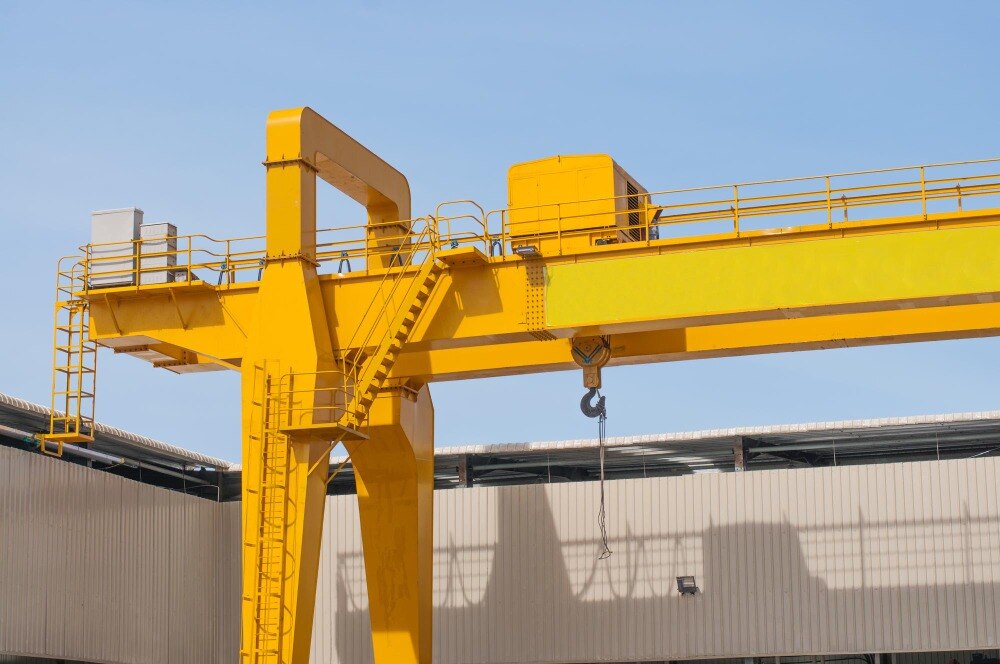
A runway installation is safe only when the building can carry the moving crane, not merely the hoist’s rated load. If existing columns, rails or foundations cannot take the reactions, choose a freestanding gantry system instead of forcing an EOT runway into the structure.
1. Provide the span, runway length, headroom, hook approach, existing column details, rail alignment, wheel loads, floor capacity and maintenance access. Missing hook approach or service clearance can make a correctly rated hoist unusable.
2. Obtain structural calculations covering the bridge, end carriages, rails, building steel, crane wheels and supporting foundations. Fitting a higher-capacity hoist to an existing crane can overload the bridge or runway even when the replacement hoist passes its own test.
3. Verify the measured electrical supply: voltage variation, three-phase 50-Hz arrangement, earthing, short-circuit protection, starting-voltage conditions and control-panel location. Do not assume a catalogued electric hoist for foundry loads ahmedabad will tolerate the site's supply.
4. Collect the rated load test certificate, electrical test records, structural calculations, inspection and maintenance records, and the site's lifting-equipment inspection procedure.
5. Mark the safe working load clearly on accessible identification plates. Under India's factory-safety framework, a competent person must periodically examine lifting machines; set separate inspection intervals for the rope, hook, brake, limit switches and structure instead of relying only on annual servicing.
What should an Ahmedabad buyer demand before approving the hoist?
Approve only a hoist that answers the foundry’s actual duty and hazard schedule. Ask a wire rope hoist manufacturing plant Ahmedabad supplier for signed drawings, calculations and test records—not only a quoted capacity.
| Item | Evidence to demand | Why it matters |
|---|---|---|
| Rated load and lift | Load, hook height and combined below-the-hook weight | Confirms the marked capacity covers the hook block, beam, grabs and ladle attachments |
| Duty and rope system | Duty classification, rope construction, drum diameter, sheave diameter and reeving drawing | Prevents bending fatigue and underspecified mechanisms |
| Safety functions | Brake holding test, overload-limit setting and upper-limit stopping distance | Shows how the hoist behaves during overload or overtravel |
| Drive and enclosure | Motor thermal data, control method, enclosure details and IP rating | Matches starts, heat, dust and moisture to the equipment |
| Service evidence | Heat-exposure limits and the inspection or load-test procedure | Defines boundaries for ladle service and future examinations |
An IP rating describes enclosure ingress protection; it does not prove resistance to radiant heat, abrasive dust, conductive scale or molten-metal splash. A factory acceptance certificate alone does not demonstrate molten-metal suitability.
Compare Derrick Engi Works Private Limited with other suppliers by issuing this same schedule for an electric wire rope hoist for foundries in Ahmedabad, including the hoist, bridge or gantry, power supply, controls, below-the-hook gear, heat protection, operator position and maintenance access.
Approve only when the load spectrum, hazards, structure, electrical supply, safety functions and documented tests match the intended zone. If any input remains unknown, hold the purchase at design review.
Related products
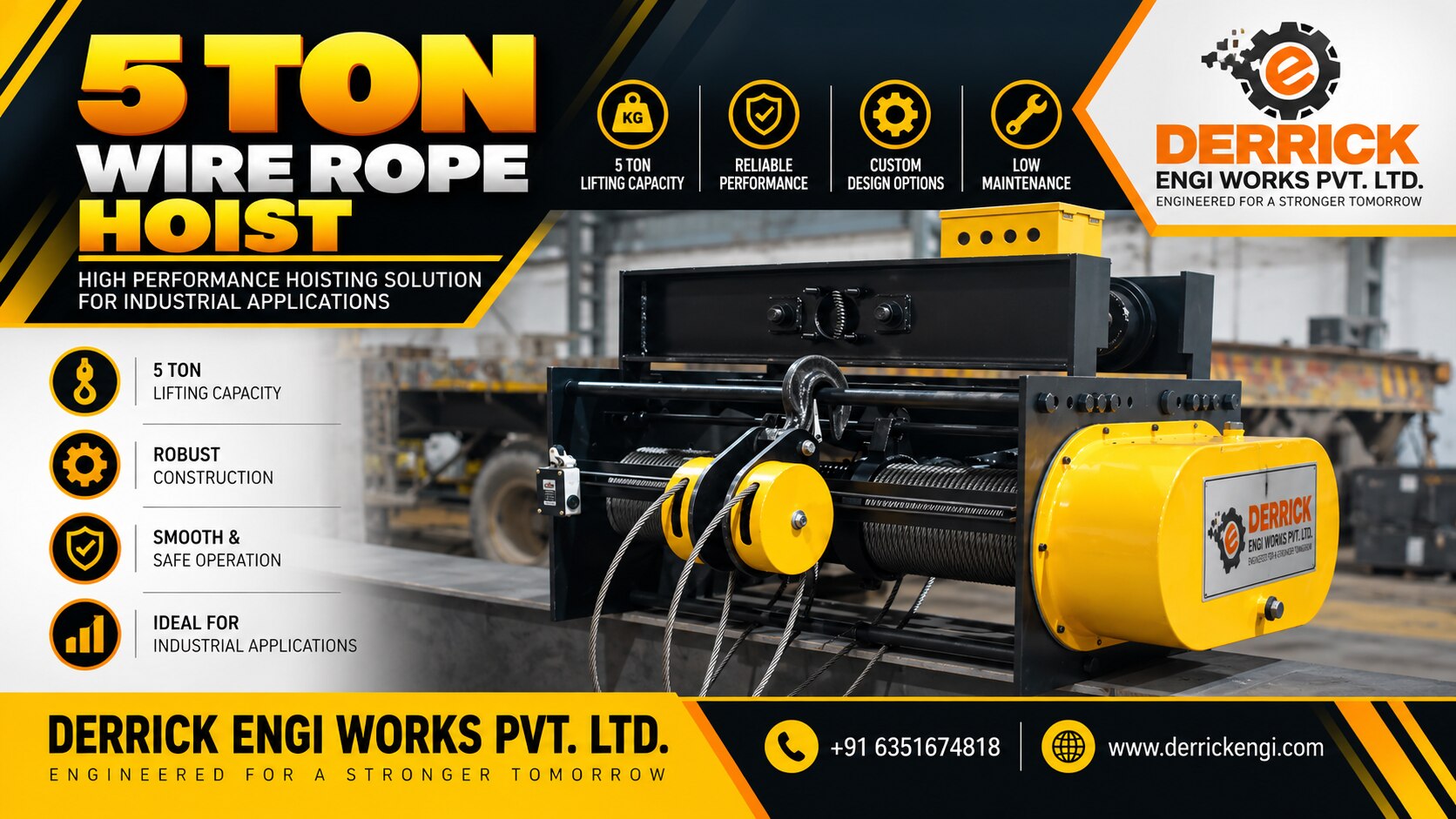 | Electric WIre Rope Hoist/ Crab 🏗️ Electric Wire Rope Hoist – Reliable Industrial Lifting Solutions Looking for an efficient and dependable lifting solution for your industrial... View product → |
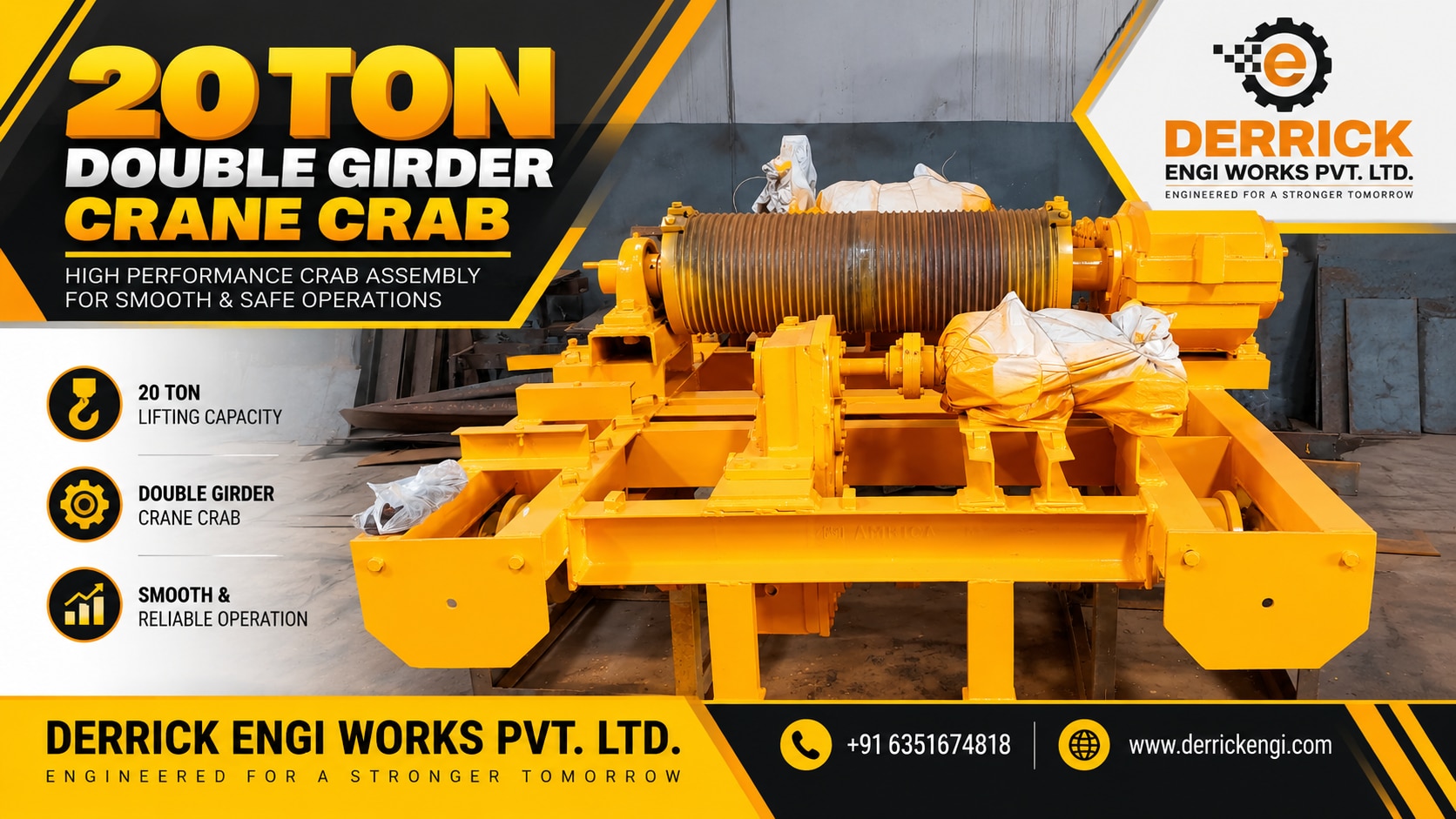 | Electric WIre Rope Hoist/ Crab 🏗️ Electric Crab Assembly for EOT & Goliath Cranes Powerful Hoisting. Smooth Cross Travel. Reliable Performance. DERRICK ENGI WORKS PVT. LTD. View product → |
Frequently asked questions
Which foundry loads can an electric wire rope hoist safely handle?
It can handle ladles, mould boxes, castings, scrap bins, furnace components and maintenance parts when the complete lifted assembly stays within the marked safe working load. Record each load’s weight, dimensions, lifting points and centre of gravity before selecting the hoist.
How do duty class and capacity change the hoist specification?
Capacity must cover the complete lifted assembly, while duty class must match lifting frequency, operating hours and load spectrum. A hoist used for repeated ladle or mould handling needs a higher-duty specification than one used for occasional maintenance lifts.
What protection does a foundry hoist need against heat, dust and molten metal?
Specify protection suited to the exposure: heat shields or increased thermal clearance near furnaces, enclosed or sealed electrical components against foundry dust, and guarding against molten-metal splash. Confirm the rated ambient temperature and enclosure ratings in the technical offer.
Can the building, runway and electrical supply support the hoist?
Check the runway beams, brackets, end stops, supporting columns, wheel loads, headroom and building structure against the hoist and lifted load. Confirm that the available voltage, phase, frequency, short-circuit protection and earthing match the hoist controls and motor.
What should an Ahmedabad buyer demand before approving the hoist?
Demand a capacity and duty-class calculation, general-arrangement and runway drawings, motor and brake data, electrical schematics, load-test records, inspection certificates, operating instructions, maintenance schedules and spare-parts details.