

A crane becomes unreliable long before it fails completely: a growing hook throat, brake drift, rope bird-caging, uneven travel, or dust inside an electrical panel can provide early warning. By the end, you will have a service-severity-based inspection routine, a practical defect checklist, and clear rules for isolating equipment before a minor fault becomes a dropped load or structural repair.
Key takeaways
- Set maintenance intervals by load, duty cycle, environment, and shock loading.
- Inspect the full load path from controls and hoist to hook and runway.
- Isolate defects before production resumes; never rely on a warning tag alone.
- Record lubrication, contamination, repairs, and inspection findings by crane identity.
Build a service-severity-based maintenance calendar
Set inspection frequency by service severity, not by an annual date alone. Heavy loads, frequent lifts, shock loading, side pulling, outdoor dust, heat, moisture, corrosive vapours, and high production hours shorten the interval. Manufacturer instructions set the baseline; a competent person should reduce it when operating conditions demand.
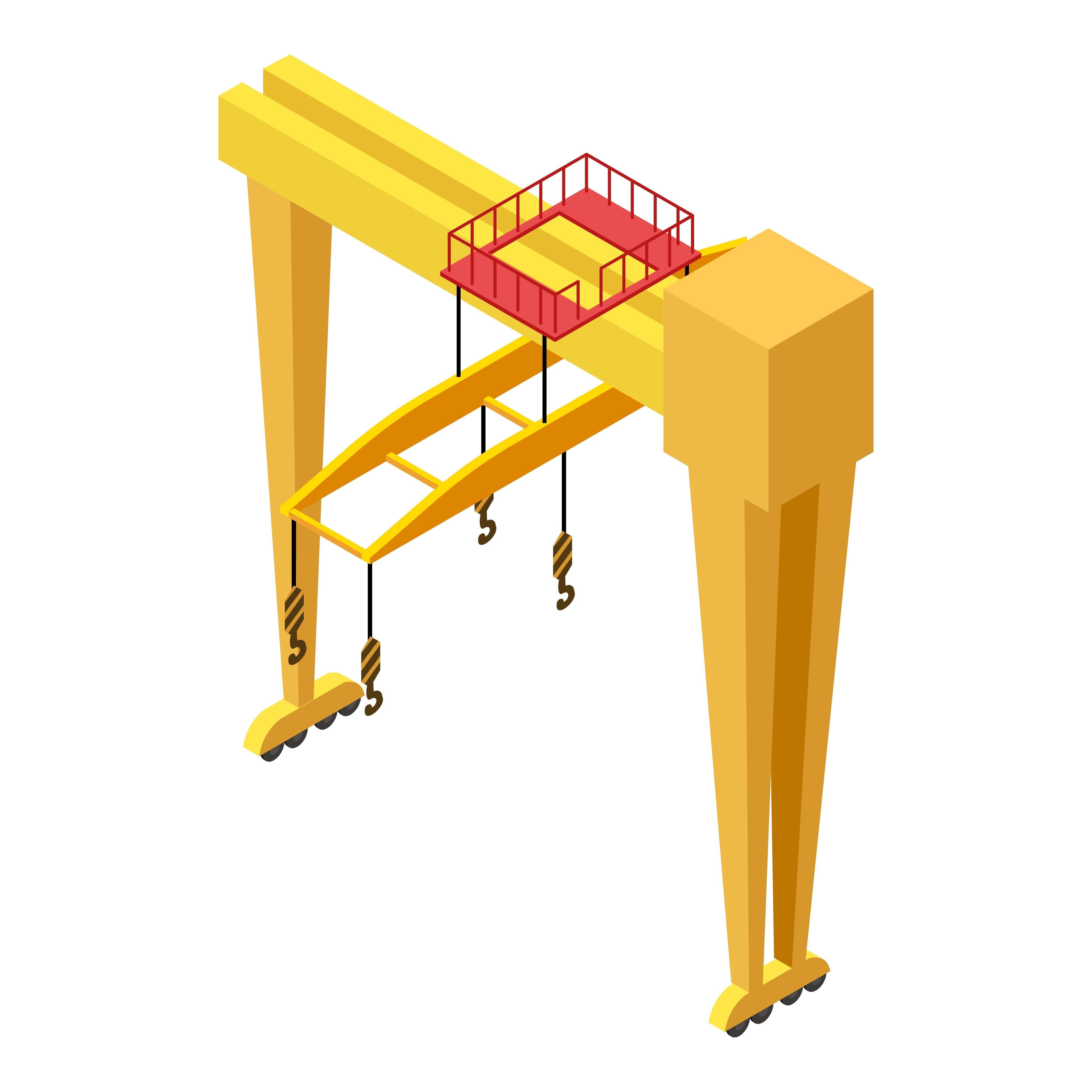
A practical calendar for double girder overhead crane maintenance for workshops is:
- Every shift: The operator checks the hook, latch, rope or chain, brakes, controls, limit switches, warning devices, pendant or radio, and visible damage before lifting.
- Weekly: A designated maintainer reviews abnormal noise, brake response, hook wear, rope damage, wheel and rail condition, festoon movement, and oil or grease leaks.
- Monthly: Inspect the trolley, end trucks, girders, welds, bolts, bumpers, sheaves, drum, electrical panel, runway interaction, and safety devices; record measurements and defects.
- Quarterly: Review load patterns, overload or side-pull events, recurring brake adjustments, wheel-flange wear, rope deterioration, and lubrication against component-manufacturer specifications.
- Annually: Complete the manufacturer’s scheduled service and a documented condition assessment, unless a shorter interval is required.
Under OSHA terminology, frequent inspections run from daily to monthly, while periodic inspections run from one to twelve months. Workshop overhead crane maintenance records must show the crane identifier, component, measured condition, defect classification, corrective action, responsible person, and return-to-service decision. A failure affecting safe operation means isolation—not “inspect again next year.”
Make the pre-shift check cover the entire load path
Before moving the first load, walk the complete path from the hook to the runway. A double girder crane inspection is not complete if the hoist looks sound but a girder, wheel, connection, or rail has developed a defect.
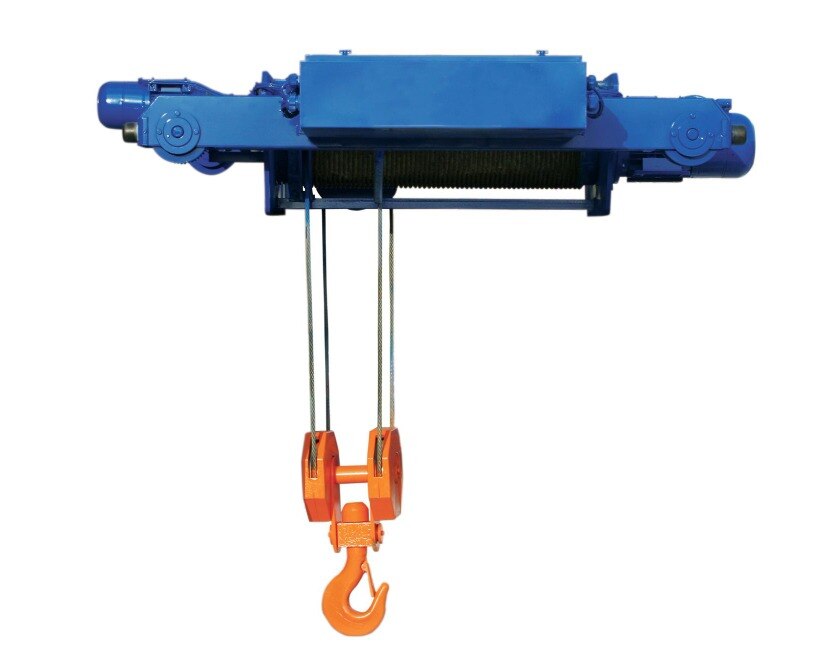
1. Check the hook for cracks, spreading, twisting, or excessive wear. Confirm that the safety latch closes fully and that the wire rope or load chain sits correctly in the sheaves, drum, or sprocket.
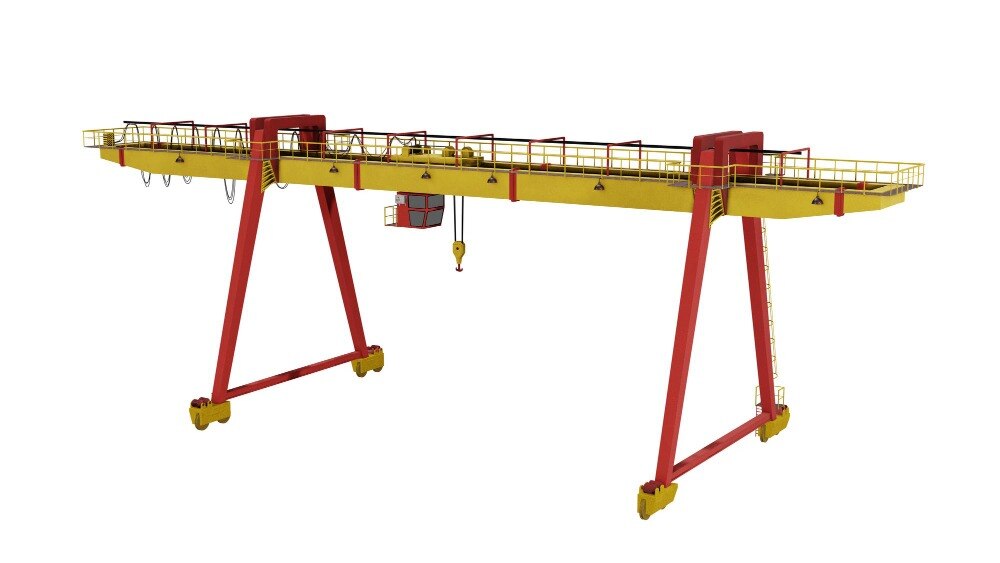
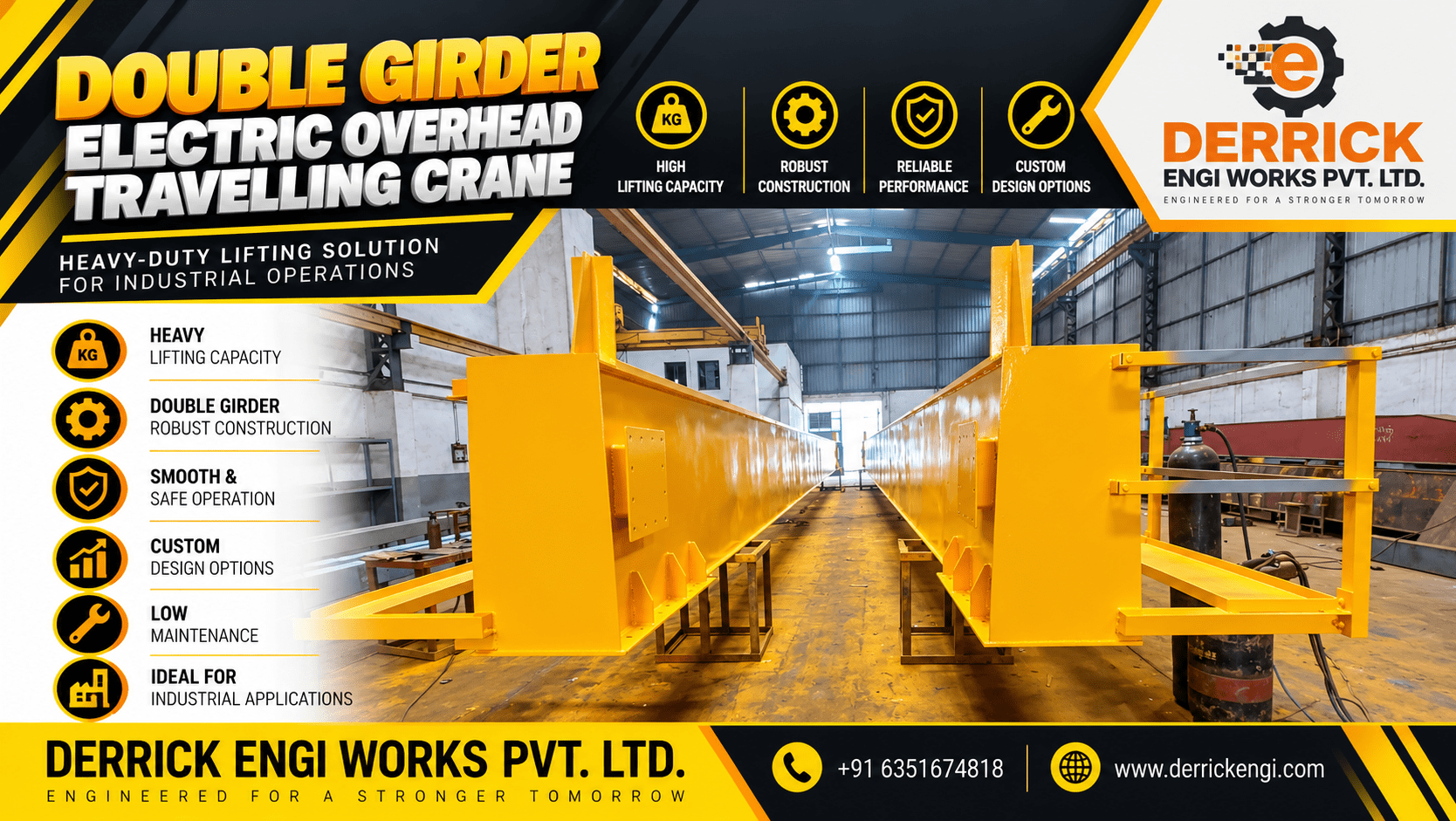
2. Inspect the hoist, trolley frame, both main girders, end trucks, welds, bolts, and visible connections. Look for cracks, loose fasteners, bent members, unusual sag, or fresh impact marks. Treat one defective girder or connection as a crane defect; the second girder is not a safety backup.
3. Follow the runway interaction. Check rails, wheels, flanges, end stops, bumpers, and obstructions for damage or misalignment that could cause binding or derailment.
4. Run the unloaded hoist and trolley at low speed. Confirm that the operating controls, pendant or radio, warning device, emergency stop, and brakes respond correctly. Release the hoist control; the hook must stop without creep or excessive noise.
5. Check upper and lower limit switches using the manufacturer’s procedure, not as routine stopping points. Inspect panels, festoon cables, pendant wiring, and exposed electrical parts for cuts, looseness, burning, or water entry.
Stop the check and isolate the crane when any condition affects safe operation. Record the defect before applying double girder overhead crane care actions such as cleaning or lubrication; lubrication cannot make damaged parts safe.
Test controls and isolate defects before production resumes
An unloaded functional test reveals control and brake faults before a load is exposed. Clear the floor, keep the hook free, and run the hoist, trolley, and bridge at low speed; never use a test load as a first response to an unexplained defect.
1. Press each pendant or radio control and confirm that motion matches the label, stops when released, and responds without delay. Test the emergency stop, warning horn, travel alarms, and power indicator.
2. Raise and lower the empty hook, then release the hoist control. The brake must stop motion and hold the hook without creep, grinding, or repeated adjustment. Do not continue production after excessive stopping distance or unusual noise.
3. Approach the upper and lower limit switches slowly and verify that each stops motion before the hook reaches a dangerous position. Reset the control and confirm that normal movement does not bypass the limit.
4. During a double girder crane inspection, examine both girders, end-truck connections, trolley frame, welds, bolts, bumpers, wheels, and visible runway interaction. A crack, loose connection, deformation, damaged cable, or exposed conductor requires isolation; the second girder does not make the defect safe.
5. Stop operation, lower the hook to a safe position, open the main disconnect, apply lockout/tagout, release stored energy, and prevent unintended crane movement before investigating. Record the symptom, location, and control tested, then obtain competent repair clearance before removing the tag.
This process protects overhead crane reliability for workshops by separating diagnosis from production lifting. Do not return the crane to service because a second test appears normal; identify the cause and verify the repair.
Control lubrication, contamination, and maintenance records
A grease gun cannot rescue a crane contaminated by abrasive dust or an overdue inspection. For double girder overhead crane care, use the lubricant, quantity, and interval specified for each component by its manufacturer. Keep lubricant off friction-brake surfaces, electrical contacts, and pendant controls. Never mix incompatible greases; damaged seals and poor lubrication can follow.
- Wire rope: use only the approved rope lubricant and application method.
- Gears: check the reducer manufacturer’s specified grade and fill level.
- Bearings: apply the stated quantity, not “as much as fits.”
- Wheels: remove contamination before lubricating accessible points.
- Reducers: inspect for leaks after servicing and record any loss.
Adjust the plan when welding fumes, abrasive dust, high humidity, corrosive vapors, or outdoor contamination enter the bay. Frequent inching and high-cycle service also demand shorter checks than clean, light-duty work.
Workshop overhead crane maintenance must address operating causes, not just grease: exceeding the rated load, side pulling, and shock loading can damage girders, end trucks, wheels, hooks, ropes, brakes, and runway components.
Use energy-control procedures before maintenance. Lock out the main disconnect, release stored electrical energy, secure suspended loads and elevated parts, prevent unintended crane or trolley movement, verify isolation, and control the release. Record each intervention against the crane identification number, date, finding, corrective action, responsible person, and next due date.
A clear history exposes repeated defects before they become failures.
Know when an inspection becomes a formal examination or repair decision
A failed pre-shift check is not a maintenance tick-box; it is a stop-work decision. Isolate the crane, attach a defect tag, and have a competent person assess the condition before anyone resets a limit switch, adjusts a brake, or returns the crane to service.
This person needs documented training, practical experience, and authority to reject the crane.
Escalate the decision when you find:
- A cracked girder, weld, end-truck connection, trolley frame, hook, wheel, or runway component. Do not treat the second girder as harmless redundancy.
- Rope discard indicators, excessive hook-throat opening, brake slip, repeated limit-switch failure, abnormal wheel-flange wear, or deformation after shock loading or an overload.
- Any repair that changes a load-bearing part, hoist, brake, control system, runway alignment, or rated capacity. Require a competent person’s inspection and a documented return-to-service decision.
- A new installation, relocation, major alteration, or repair that your law, insurer, customer, or site procedure subjects to an independent third-party examination. Obtain the signed examination report before lifting production loads.
- Cracks, unexplained repeat defects, structural distortion, drive or brake faults, electrical-control problems, or missing design data that exceed workshop capability. Bring in the crane maker or a specialist engineer.
For double girder overhead crane maintenance for workshops, connect every finding to measurements, photographs, corrective action, and the examiner’s name—not “inspected—OK.” Derrick Engi Works Private Limited can help interpret crane-specific drawings and repair limits when the original records are incomplete; the final acceptance still belongs to the appointed competent person.
That discipline protects overhead crane reliability for workshops.
Related products
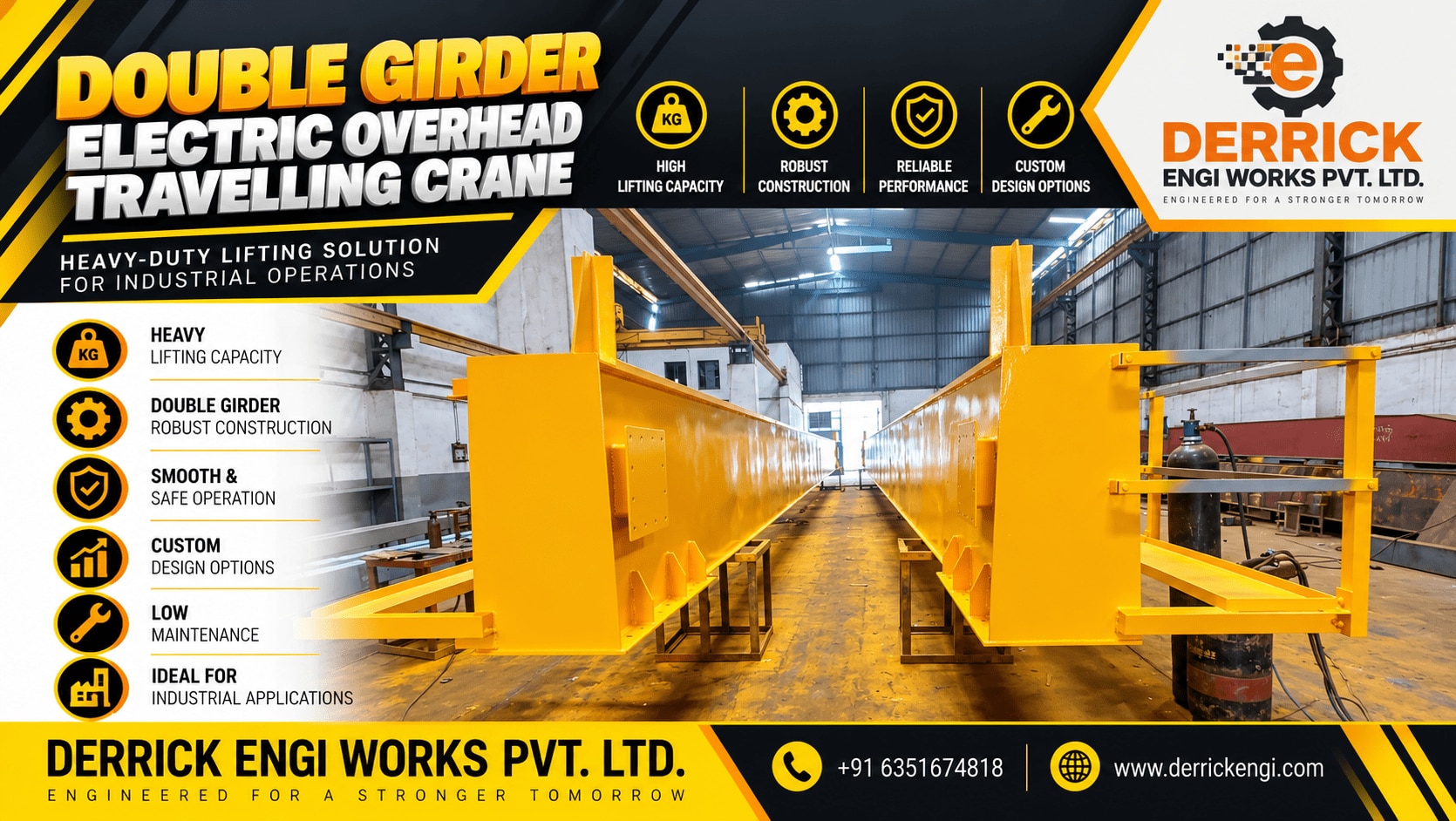 | EOT Cranes Double Girder Electric Overheard Travelling Crane 🏗️ Double Girder Electric Overhead Travelling (EOT) Crane Heavy Lifting. Robust Engineering. Reliable Performance. DERRICK ENGI WORKS PVT. LTD. View product → |
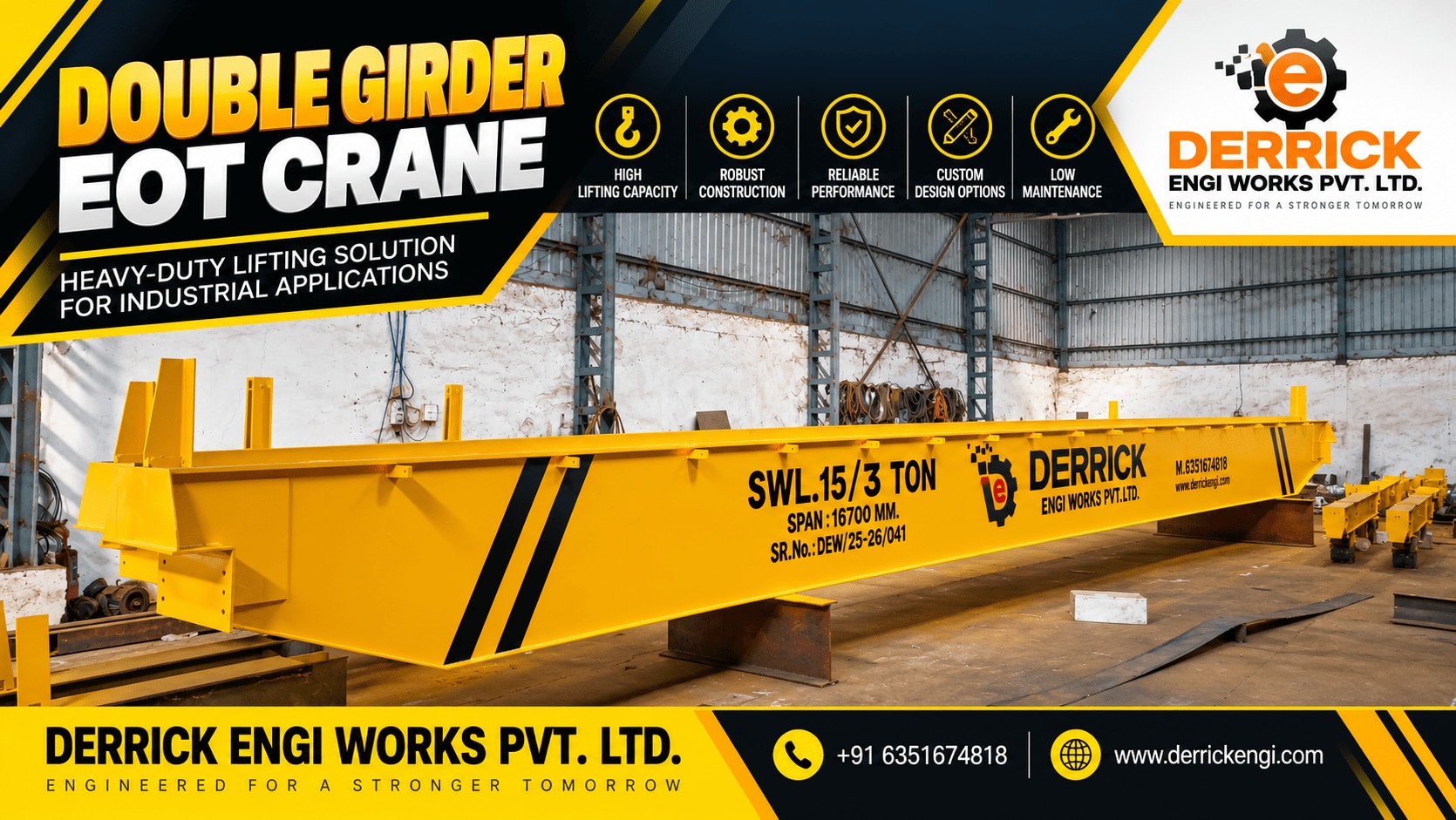 | EOT Cranes 🏗️ Double Girder EOT Crane – Heavy-Duty Industrial Lifting Strong Engineering. Efficient Material Handling. Reliable Performance. View product → |
Frequently asked questions
How often should a workshop inspect a double girder overhead crane?
Set the interval by service severity rather than an annual date alone. Heavy loads, frequent lifts, shock loading, side pulling, dust, heat, moisture, corrosive vapours, and high production hours require shorter intervals than the manufacturer baseline.
What should a pre-shift crane inspection cover?
Check the entire load path, including controls, electrical equipment, hoist, wire rope or chain, sheaves, hook, latch, brakes, trolley, girders, end trucks, wheels, runway, guards, and warning devices.
What should happen when a crane defect is found?
Stop using the crane, isolate it from operation, identify the defect clearly, and have a competent person assess it before production resumes. Repair or formally examine safety-critical defects before returning the crane to service.
What records support reliable overhead crane maintenance?
Keep the crane identity, inspection date, findings, inspector, lubrication work, contamination issues, repairs, replacement parts, test results, and return-to-service decision in a controlled record.
Related products
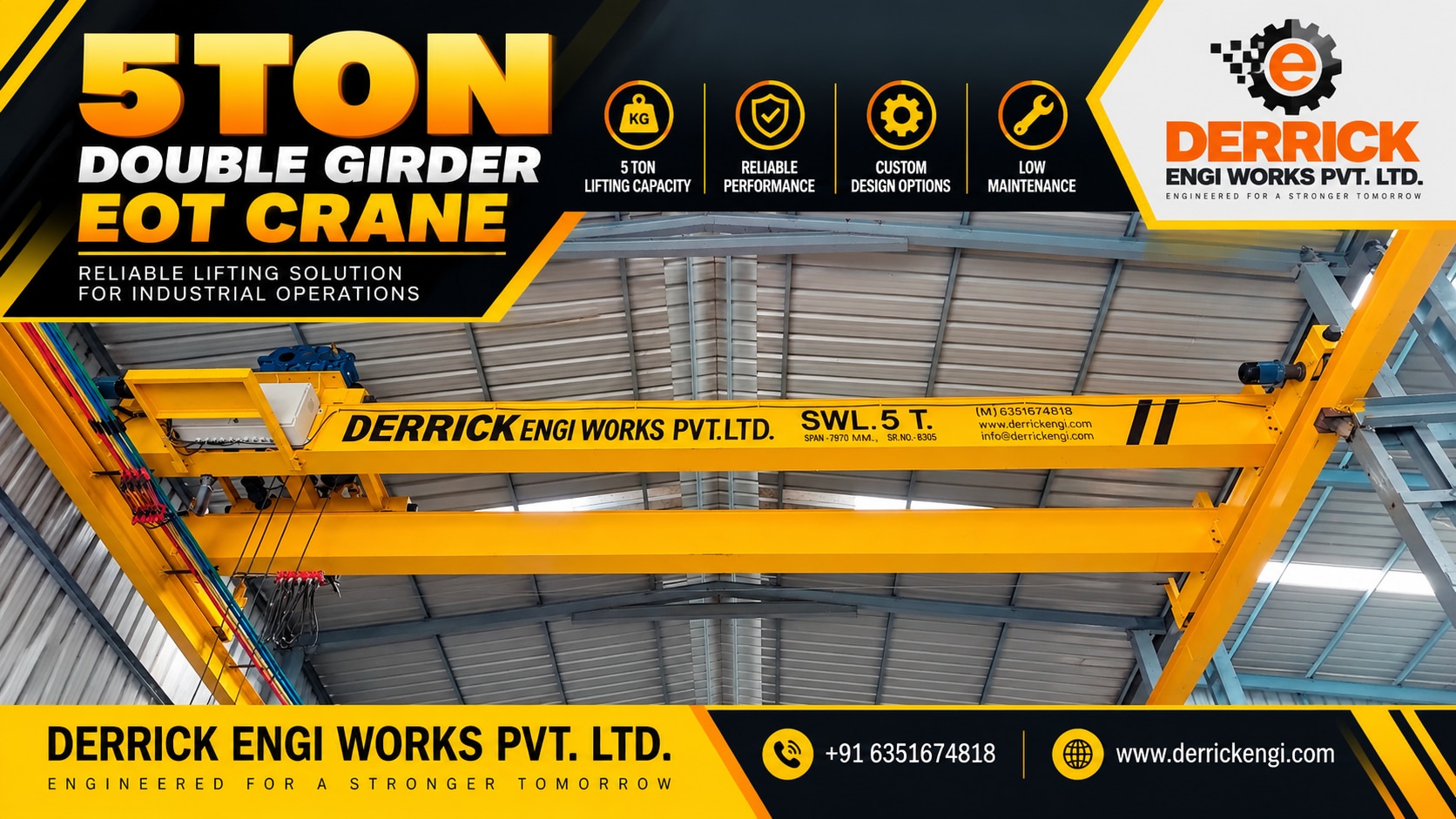 | EOT Cranes 🏗️ 5 Ton Double Girder EOT Crane Need a dependable overhead material-handling solution for your industry? DERRICK ENGI WORKS PVT. LTD. View product → |
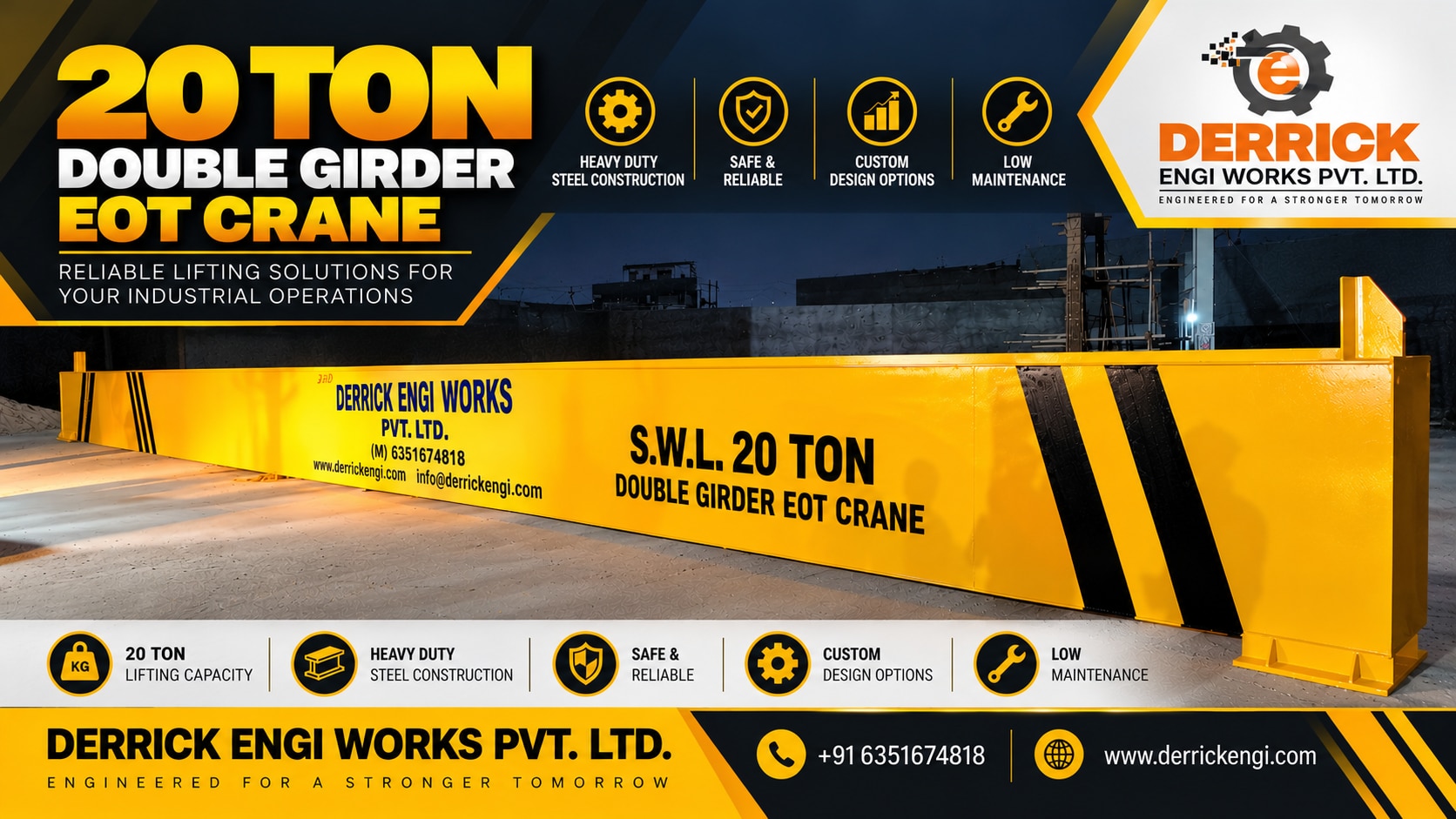 | EOT Cranes 🏗️ DG EOT Crane – Double Girder Electric Overhead Travelling Crane Heavy Lifting. Robust Engineering. Reliable Performance. DERRICK ENGI WORKS PVT. View product → |