

Forklift queues, blocked aisles, repeated manual handling and slow loading-bay transfers usually indicate a mismatch between the load path and the facility’s handling equipment. By the end, you will be able to identify the bottleneck, compare crane and non-crane options, specify the engineering inputs, and plan an installation without relying on capacity alone.
Key takeaways
- Map forklift crossings, blocked aisles, waiting time and every load-transfer point.
- Choose overhead or gantry systems according to headroom, runway access and workflow.
- Check load weight, span, lift height, duty cycle, power supply and building structure.
- Request drawings, inspection records, installation plans and operator training before approval.
Which indoor lifting bottlenecks justify a crane?
A crane is justified when repeated lifting ties up forklifts, creates manual transfers, delays loading bays, or leaves too little floor space for safe turning. Map where loads are received, staged, processed, stored and dispatched, then mark forklift crossings, blocked aisles and waiting time.
- Peak handling periods, shifts, starts per hour and the intended load path.
- Maximum payload plus the heaviest below-hook device: spreader beam, lifting beam, grab or fixture.
- Pickup and landing points, available clearance and any obstructed landing zone.
- Dies, machinery, pallets, fabricated parts and maintenance components that must move repeatedly.
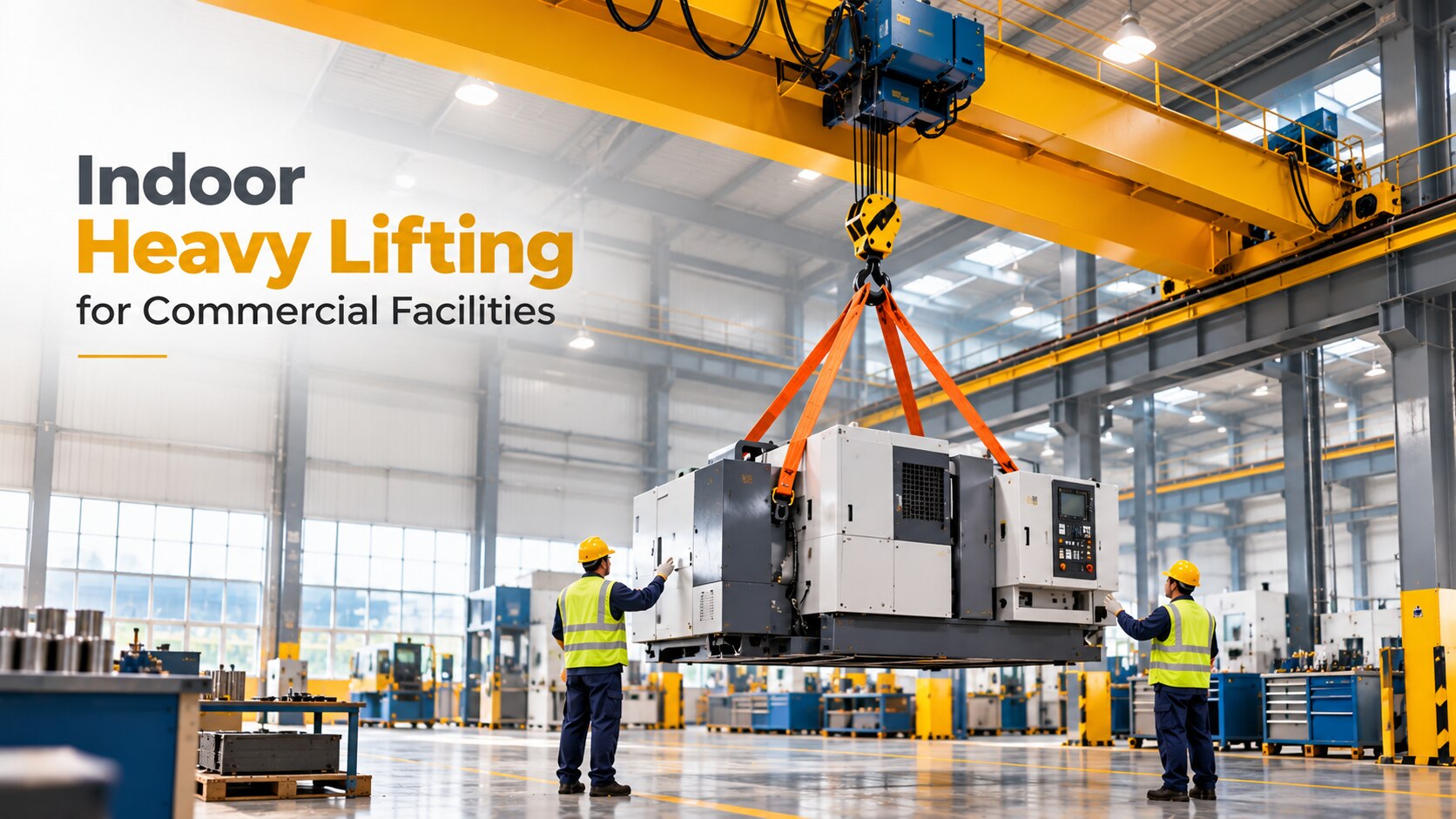
An indoor crane for heavy loads enables overhead crane material movement above fixed work areas, keeping floor routes open for people and vehicles. Calculate total lifted mass, not the hook rating alone: a nominal 5-ton crane is inadequate when a 5-ton payload plus its attachment exceeds the planned working load.
| Problem | Evidence | Crane verdict |
|---|---|---|
| Genuine lifting bottleneck | Repeated crossings, transfers or bay queues on a defined route | Consider an overhead system |
| Storage or layout problem | Badly placed racks, blocked aisles or no safe landing zone | Reconfigure the area first |
| Rigging problem | Unknown centre of gravity, unstable attachment or side-pull risk | Correct the rigging before selecting equipment |
A crane does not fix racks in the wrong position, an unknown load centre of gravity or an obstructed landing zone.
How does overhead crane material movement work inside the facility?
One load follows four coordinated movements: the bridge travels along runway rails, the trolley travels across the bridge, the hoist raises or lowers the hook, and the operator positions the load over its landing zone.
Span and runway length define coverage; hook approach and end approach determine whether the hook reaches the actual pickup and drop-off points. Lifting height also depends on roof clearance, hoist and hook-block height, and the required hook-up and hook-down positions. A quoted lifting height is incomplete without both positions.
Measure the complete route before fixing the runway:
- Roof and runway clearance, hoist and hook-block height
- Racks, sprinklers, lighting, ducts and production equipment
- Fire shutters, doors and partitions
- Emergency egress and the clearance needed to keep it open
The operator may use a pendant or radio control, but neither replaces continuous line of sight to the hook and load. Define an operating position, exclusion zones and communication rules before movement starts. Provide emergency stops, upper and lower limit switches, travel limits, brakes and overload protection.
Variable-frequency drives reduce acceleration, braking shock and load swing. They do not permit side pulling, dragging, shock loading, or travel with an unknown centre of gravity. For overhead crane material movement, the route can be the bottleneck.
A commercial lifting crane Ahmedabad facility selects safely only when its controls, clearances and landing zones match the real path.
Which lifting system fits the building and the workflow?
A fixed route serving several workstations favours an overhead crane, provided the building can carry the runway reactions. An indoor crane for heavy loads keeps floor routes open, while an indoor lifting crane for a commercial facility in Ahmedabad must be sized for the actual load path, not floor area or advertised capacity.
| Option | Best fit | Main checks |
|---|---|---|
| Indoor overhead crane | Repeatable movement across several stations | Runway reactions, span, hook height, headroom |
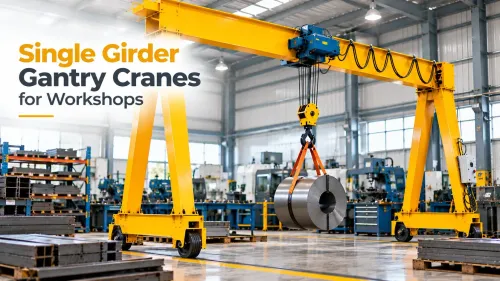
| Single-girder gantry crane | No suitable columns or runway beams | Level floor strength, concentrated wheel loads, aisle width, end stops and collision protection |
| Forklift | Flexible floor-level pickup and delivery | Turning space, traffic separation, load stability and floor condition |
| Mobile crane | Occasional lifting without permanent infrastructure | Setup space, outrigger loads, ground bearing and overhead obstructions |
| Jib crane | One workstation with limited rotation and reach | Column or foundation strength, outreach and slewing clearance |
| Monorail | Straight, repeated movement between fixed points | Route alignment, switches, clearances and landing positions |
A floor-supported gantry bypasses the building runway, but its wheels concentrate loads on the floor and its legs consume aisle space. Protect people, racks, vehicles and doors with end stops, barriers and collision controls; it is not automatically cheaper after civil work and traffic segregation.
Reject a roof-supported crane when clear height is inadequate, the structure is unverified, the load path crosses people, or outdoor flexibility is required. Compare installation disruption, shutdown time and traffic segregation alongside purchase price and rated capacity before choosing an indoor lifting crane for a commercial facility in Ahmedabad.
What engineering and operating data must be checked before approval?
Approve an indoor lifting crane for commercial facility in Ahmedabad only after converting the survey into a written procurement specification. A commercial lifting crane in Ahmedabad must be sized for the complete below-hook load, not the payload alone.
1. Record the maximum lifted mass, heaviest spreader, lifting beam, grab or fixture, lifting frequency, operating cycles and load spectrum. Assign the duty class under ISO 4301-1, then specify span, runway length, hook height, hook approach, bridge and trolley speeds, starts per hour, headroom, floor loading and maintenance access.
2. Obtain a qualified structural survey and runway alignment check. For a top-running crane, require runway beam arrangement, support spacing, maximum wheel loads, horizontal forces and structural design assumptions. Do not approve existing roof steel because it looks substantial.
Apply IS 3177 to design, construction, installation, inspection, testing, operation and maintenance, and request calculations rather than only a capacity certificate.
3. Check Ahmedabad heat, dust, monsoon humidity, loading-bay moisture, power quality, earthing and panel protection. Confirm access for component removal, load-path segregation, landing zones, fire clearances and emergency egress. The appointed engineer and facility manager must document acceptance before installation.
A quotation that omits these details is not a complete basis for approval. Excessive starts, dust in panels or inaccessible brakes can create failures even when the crane rarely reaches its rated load.
How should an Ahmedabad facility procure and install the system?
Limit production interruption by treating procurement as a controlled installation project, not a capacity quotation.
1. Survey the building and route. Record runway straightness and level, headroom, floor condition, power and earthing points, erection access, future component-removal access, pickup and landing zones, and the actual load path.
2. Freeze the maximum load, below-hook equipment, duty cycle, starts per hour, travel speeds, ambient heat, dust, monsoon moisture and panel protection before requesting prices. A commercial lifting crane in Ahmedabad can fail through underspecified duty, contaminated panels or excessive starts even when its rated load is rarely exceeded.
3. Issue bridge and runway drawings, wheel-load calculations and structural calculations. Define responsibility for runway beams, columns or gantry legs, electrical works, controls, lifting accessories and civil modifications. Ask a crane supplier in Odhav, Ahmedabad for component brands, enclosure ratings, brake and overload details, limit-switch arrangements and inspection access.
4. Put delivery, erection access and shutdown windows into the programme. Require alignment, wiring, functional testing and documented load testing before production release.
5. Train operators on line-of-sight control, radio or pendant use, exclusion zones, emergency stops and abnormal-load reporting. Handover must include safe-working-load markings, test-load documentation, periodic examination by a competent person, inspection and lubrication schedules, spare availability, maintenance register, warranty exclusions, emergency response time and service coverage.
Derrick Engi Works Private Limited can be compared with other Ahmedabad suppliers when its proposal covers the load path and duty cycle, and separates equipment, civil work, shutdowns, electrical work, training and long-term service costs.
Related products
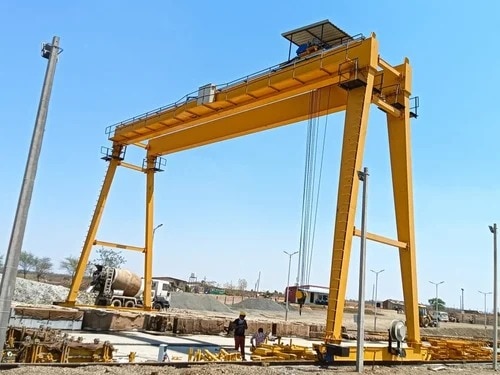 | Eot Cranes Single Girder Overhead Travelling Crane Manufacturer Derrick Engi Works Pvt. Ltd. is a trusted manufacturer and supplier of Single Girder Overhead Travelling Cranes, designed for efficient... |
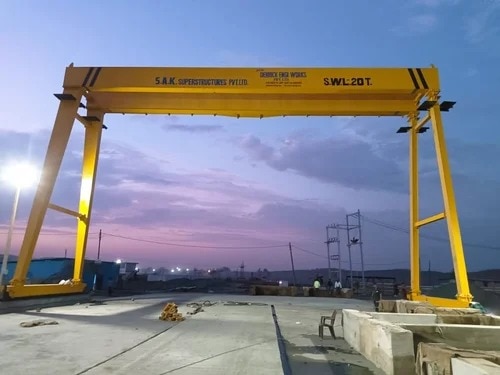 | Eot Cranes Electric Overhead Traveling Crane Manufacturer Derrick Engi Works Pvt. Ltd. is a trusted manufacturer and supplier of Electric Overhead Traveling Cranes, designed for efficient, safe,... |
Frequently asked questions
Which indoor lifting bottlenecks justify a crane?
A crane is worth assessing when repeated lifting occupies forklifts, requires manual transfers, delays loading bays, or leaves insufficient floor space for safe turning. Map receiving, staging, processing, storage and dispatch routes to identify the constraint.
How does overhead crane material movement work inside a facility?
A bridge travels along runway beams while a trolley moves across the bridge and a hoist raises or lowers the load. This keeps movement above the floor and reduces forklift crossings when the runway covers the required work area.
Which lifting system fits an Ahmedabad commercial facility?
Compare a single-girder overhead travelling crane, single-girder gantry crane and electric overhead travelling crane against available headroom, runway support, span, lift height, floor condition and the workflow’s travel path.
What engineering data must be checked before crane approval?
Confirm the maximum load, load dimensions, span, lift height, duty cycle, travel speed, power supply, runway or gantry support, floor capacity, clearances and maintenance access before approving the design.
How should a facility procure and install an indoor lifting crane?
Give suppliers a measured layout, load schedule, operating cycle and building information. Compare drawings, controls, safety devices, installation responsibilities, inspection documents, operator training and maintenance support before selecting a supplier.
Related product
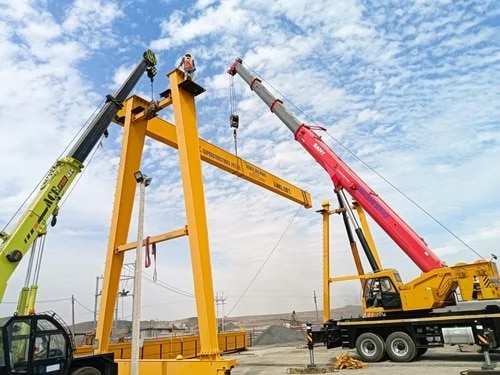 | Eot Cranes Gantry Crane Single Girder Crane Manufacturer Derrick Engi Works Pvt. Ltd. is a reliable manufacturer and supplier of Gantry Crane Single Girder Cranes, designed for efficient... |